Anzeige
Fauna Marin GmbH Mrutzek Meeresaquaristik BAS Osci Motion Kölle Zoo Aquaristik

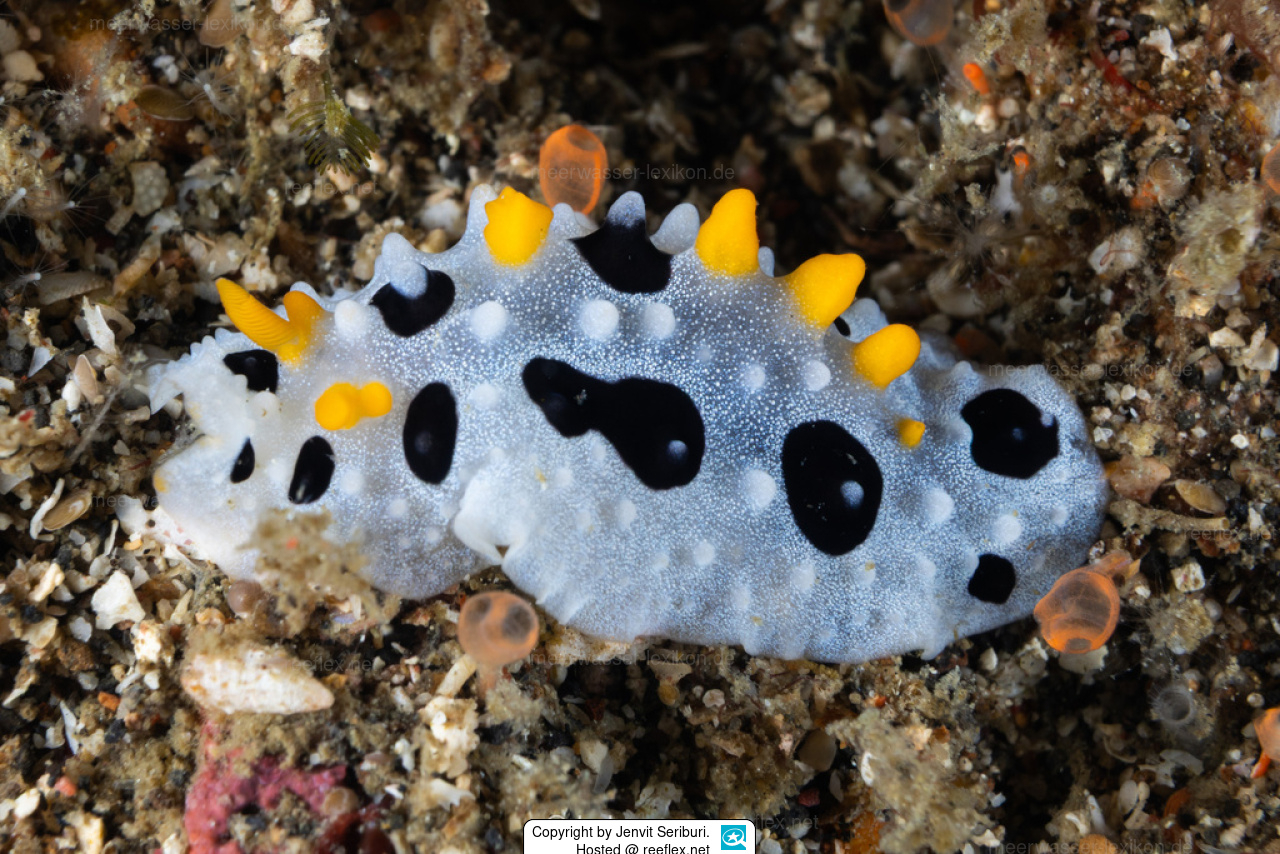
Phyllidia babai Baba's Phyllidia

Phyllidia babai is commonly referred to as Baba's Phyllidia. Difficulty in the aquarium: Not suitable for aquarium keeping. Toxicity: Toxic hazard unknown.


Profilbild Urheber Dan Schofield, UK

Phyllidia babai,Bitung, Bitung City, North Sulawesi, Indonesia 2020 (CC BY)


Courtesy of the author Dan Schofield, UK . Please visit www.inaturalist.org for more information.

Uploaded by Muelly.

Image detail


Profile

lexID:
6890 
AphiaID:
536635 
Scientific:
Phyllidia babai 
German:
Babas Phyllidia 
English:
Baba's Phyllidia 
Category:
Naaktslakken 
Family tree:
Animalia (Kingdom) > Mollusca (Phylum) > Gastropoda (Class) > Nudibranchia (Order) > Phyllidiidae (Family) > Phyllidia (Genus) > babai (Species) 
Initial determination:
Brunckhorst, 1993 
Occurrence:
Australia, Indo Pacific, Indonesia, Japan, Komodo (Komodo Island), Lembeh Strait, Okinawa, Papua New Guinea, Sulawesi 
Marine Zone:
Subtidal, sublittoral, infralittoral, deep zone of the oceans from the lower limit of the intertidal zone (intertidal) to the shelf edge at about 200 m water depth. neritic. 
Sea depth:
Meter 
Habitats:
Seawater, Sea water 
Size:
0.79" - 1.69" (2cm - 4.3cm) 
Temperature:
71.6 °F - 82.4 °F (22°C - 28°C) 
Food:
Carnivore, Food specialist, Sponges 
Difficulty:
Not suitable for aquarium keeping 
Offspring:
None 
Toxicity:
Toxic hazard unknown 
CITES:
Not evaluated 
Red List:
Not evaluated (NE) 
Related species at
Catalog of Life
:
 
More related species
in this lexicon
:
 
Author:
Publisher:
Meerwasser-Lexikon.de
Created:
Last edit:
2026-02-09 12:44:16 

Info

Phyllidia babai Brunckhorst, 1993

The backround colur is a cream to light yellow or a pale white, with yellow tubercles in the mittle of the mantle.Rhinophores are yellow.

This species feeds on the yellow sponge Acanthella stipata.

Very similar species are Phyllidia willani and Phyllidia exquisita.

Biota > Animalia (Kingdom) > Mollusca (Phylum) > Gastropoda (Class) > Heterobranchia (Subclass) > Opisthobranchia (Infraclass) > Nudibranchia (Order) > Euctenidiacea (Suborder) > Doridacea (Infraorder) > Phyllidioidea (Superfamily) > Phyllidiidae (Family) > Phyllidia (Genus)

External links

  1. Wikipedia (en). Abgerufen am 07.08.2020.

Pictures

Commonly


Husbandry know-how of owners

0 husbandary tips from our users available
Show all and discuss