


 MDPI Open Access Journals

Info
75% of all black corals known to date live at depths of less than 50 meters.
However, this estimate may be exaggerated, as many genera of the families Antipathidae, Myriopathidae, and Aphanipathidae occur predominantly at shallow (0–30 meters) and mesophotic (30–150 meters) depths, and only up to 31.6% of the species described to date occur below 800 meters.
Not all Antipatharia families are equally represented in the deep sea; at depths of 800–3500 meters, the dominant families are the Cladopathidae, Antipathidae, and Schizopathidae (13.68%, 14.74%, and 51.58%, respectively).
Below 3,500 meters, only the families Leiopathidae, Cladopathidae, and Schizopathidae are present, with Schizopathidae accounting for 85.71% of the black coral species known from the deep sea and hadal zones.
Despite their name, black corals are rarely black, but can be white, red, green, yellow, or brown, depending on the species.
The corals owe their name to their black skeletons, which are made of protein and chitin.
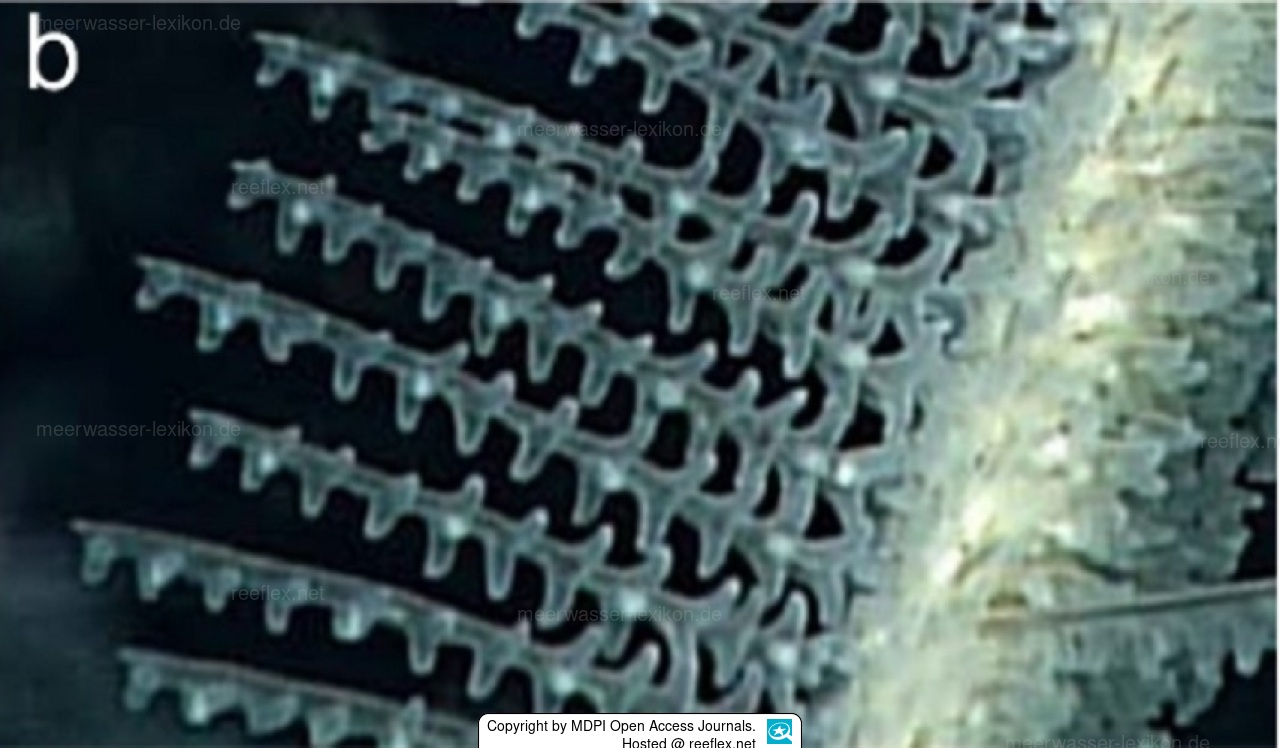
Black corals are also known as thorny corals because of the microscopic spines that cover their skeletons.
Etymology:
The name Antipatharia comes from the ancient Greek word antipathes (“against disease”).
In the Hawaiian language, black coral is called ʻēkaha kū moana (“hard bush that grows in the sea”) and is the official state gem of Hawaii.
In Malay, corals are called akah bahar (“root of the sea”), probably because of their tendency to grow in low-light depths.
Heteropathes pacifica was discovered in Derickson Seamount in the North Pacific at a depth of 4511 meters.
The holotype was 22 cm high and 12 cm wide, while the paratype was 32 cm high but broken off at both the top and bottom of the stem.
Etymology: Etymology – From “Pacific” in reference to the type locality.
Synonym: Heliopathes pacifica Opresko, 2005 · unaccepted (new combination)
However, this estimate may be exaggerated, as many genera of the families Antipathidae, Myriopathidae, and Aphanipathidae occur predominantly at shallow (0–30 meters) and mesophotic (30–150 meters) depths, and only up to 31.6% of the species described to date occur below 800 meters.
Not all Antipatharia families are equally represented in the deep sea; at depths of 800–3500 meters, the dominant families are the Cladopathidae, Antipathidae, and Schizopathidae (13.68%, 14.74%, and 51.58%, respectively).
Below 3,500 meters, only the families Leiopathidae, Cladopathidae, and Schizopathidae are present, with Schizopathidae accounting for 85.71% of the black coral species known from the deep sea and hadal zones.
Despite their name, black corals are rarely black, but can be white, red, green, yellow, or brown, depending on the species.
The corals owe their name to their black skeletons, which are made of protein and chitin.
Black corals are also known as thorny corals because of the microscopic spines that cover their skeletons.
Etymology:
The name Antipatharia comes from the ancient Greek word antipathes (“against disease”).
In the Hawaiian language, black coral is called ʻēkaha kū moana (“hard bush that grows in the sea”) and is the official state gem of Hawaii.
In Malay, corals are called akah bahar (“root of the sea”), probably because of their tendency to grow in low-light depths.
Heteropathes pacifica was discovered in Derickson Seamount in the North Pacific at a depth of 4511 meters.
The holotype was 22 cm high and 12 cm wide, while the paratype was 32 cm high but broken off at both the top and bottom of the stem.
Etymology: Etymology – From “Pacific” in reference to the type locality.
Synonym: Heliopathes pacifica Opresko, 2005 · unaccepted (new combination)


