Anzeige
Fauna Marin GmbH Mrutzek Meeresaquaristik Fauna Marin GmbH Osci Motion ICP

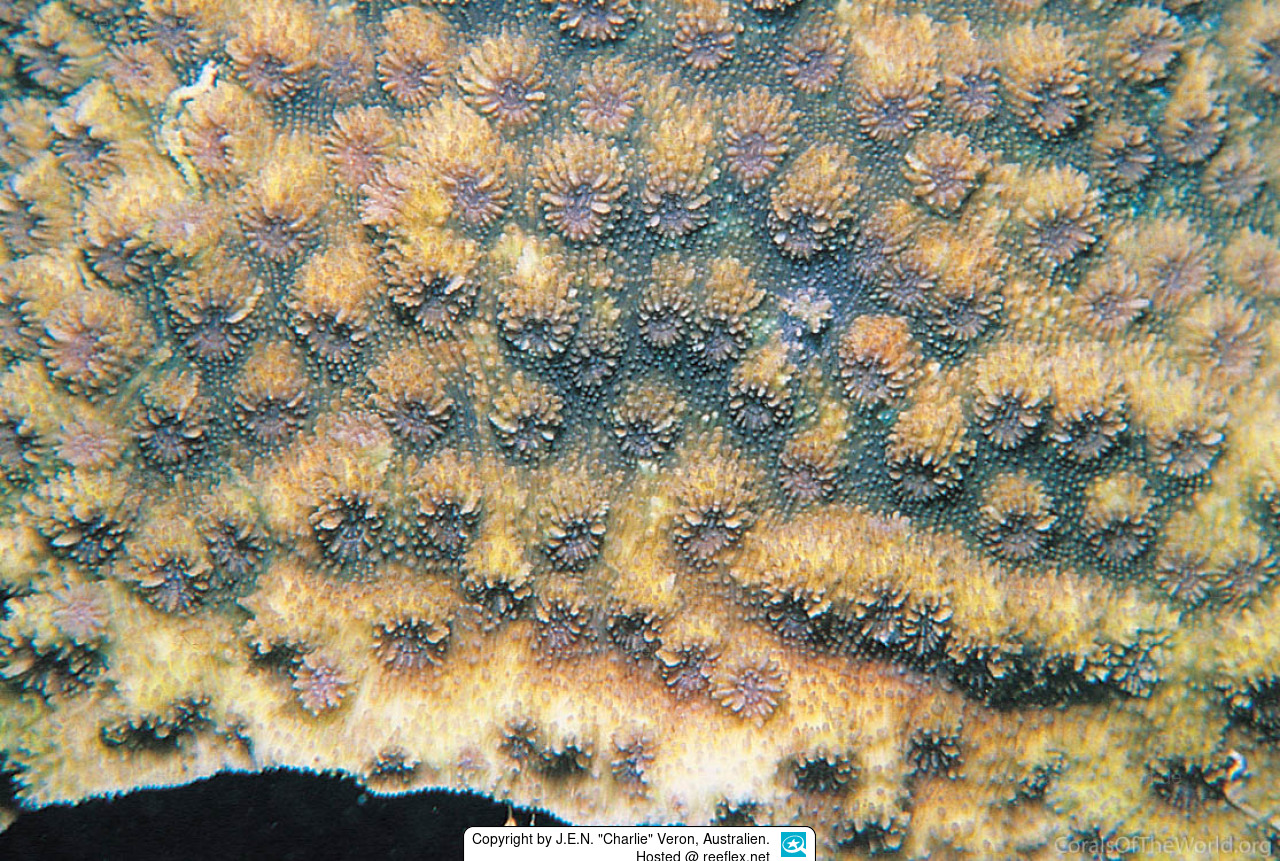
Echinopora hirsutissima Hedgehog Coral, Prickly-pored Coral

Echinopora hirsutissima is commonly referred to as Hedgehog Coral, Prickly-pored Coral. Difficulty in the aquarium: There are no reports available yet that this animal has already been kept in captivity successfully. A aquarium size of at least 200 Liter is recommended. Toxicity: Toxic hazard unknown.


Profilbild Urheber Dr. John Edward Norwood "Charlie" Veron, Australien

Foto: Tansania, Ost-Afrika


Courtesy of the author Dr. John Edward Norwood "Charlie" Veron, Australien . Please visit www.coralsoftheworld.org for more information.

Uploaded by AndiV.

Image detail


Profile

lexID:
1653 
AphiaID:
207420 
Scientific:
Echinopora hirsutissima 
German:
Igel-Koralle, Großpolypige Steinkoralle 
English:
Hedgehog Coral, Prickly-pored Coral 
Category:
Steenkoralen LPS 
Family tree:
Animalia (Kingdom) > Cnidaria (Phylum) > Anthozoa (Class) > Scleractinia (Order) > Merulinidae (Family) > Echinopora (Genus) > hirsutissima (Species) 
Initial determination:
Milne Edwards & Haime, 1849 
Occurrence:
Sudan, Djibouti, Eritrea, (the) Maldives, Arabian Sea, Australia, Cambodia, Comores, Egypt, Gulf of Aden, Gulf of Oman / Oman, India, Indian Ocean, Indo Pacific, Indonesia, Iran, Israel, Japan, Jordan, Kenya, Kiribati, Madagascar, Malaysia, Marschall Islands, Mauritius, Mayotte, Micronesia, Mozambique, Myanmar, Nauru, New Caledonia, Palau, Papua New Guinea, Philippines, Red Sea, Réunion , Saudi Arabia, Singapore, Solomon Islands, Somalia, South-Africa, Sri Lanka, Taiwan, Tansania, Thailand, The Chagos Archipelago (the Chagos Islands), the Seychelles, Tonga, Tuvalu, Vanuatu, Vietnam, Western Indian Ocean, Yemen 
Marine Zone:
Subtidal, sublittoral, infralittoral, deep zone of the oceans from the lower limit of the intertidal zone (intertidal) to the shelf edge at about 200 m water depth. neritic. 
Sea depth:
1 - 40 Meter 
Habitats:
Reef-associated, Seawater, Sea water 
Size:
up to 11.81" (30 cm) 
Temperature:
75.2 °F - 80.6 °F (24°C - 27°C) 
Food:
Phytoplankton, Plankton, Zooplankton, Zooxanthellae / Light 
Tank:
44 gal (~ 200L)  
Difficulty:
There are no reports available yet that this animal has already been kept in captivity successfully 
Offspring:
Easy to breed 
Toxicity:
Toxic hazard unknown 
CITES:
Appendix II ((commercial trade possible after a safety assessment by the exporting country)) 
Red List:
Least concern (LC)  
Related species at
Catalog of Life
:
 
More related species
in this lexicon
:
 
Author:
Publisher:
Meerwasser-Lexikon.de
Created:
Last edit:
2026-03-11 16:36:53 

Captive breeding / propagation

Echinopora hirsutissima is easy to breed. There are offspring in the trade available. If you are interested in Echinopora hirsutissima, please contact us at Your dealer for a progeny instead of a wildcat. You help to protect the natural stocks.

Info

Echinopora hirsutissima Milne Edwards & Haime, 1849

Infos from AIMS;
Description: Colonies are submassive or encrusting. Corallites are 4-7 millimetres diameter and are thick walled with prominent skeletal structures. Costae are strongly beaded. The coenosteum is densely covered with thick, finely elaborated spinules.
Color: Mustard, green, brown or purple, often with pale septo-costae.

Similar Species: Echinopora irregularis. See also E. horrida and E. gemmacea, which have less coarse corallite structures and smaller corallites.

Synonymised names
Echinopora helli Rousseau, 1854 · unaccepted > junior subjective synonym
Echinopora hirsutisima Milne Edwards & Haime, 1849 · unaccepted > misspelling - incorrect subsequent spelling
Echinopora solidior Gardiner, 1904 · unaccepted > junior subjective synonym
Echinopora tertia Gardiner, 1904 · unaccepted > junior subjective synonym

External links

  1. Corals of the World by Charlie Veron (en). Abgerufen am 07.08.2020.

Pictures

Commonly


Husbandry know-how of owners

0 husbandary tips from our users available
Show all and discuss