Anzeige
Fauna Marin GmbH Mrutzek Meeresaquaristik Fauna Marin GmbH Aqua Medic Kölle Zoo Aquaristik

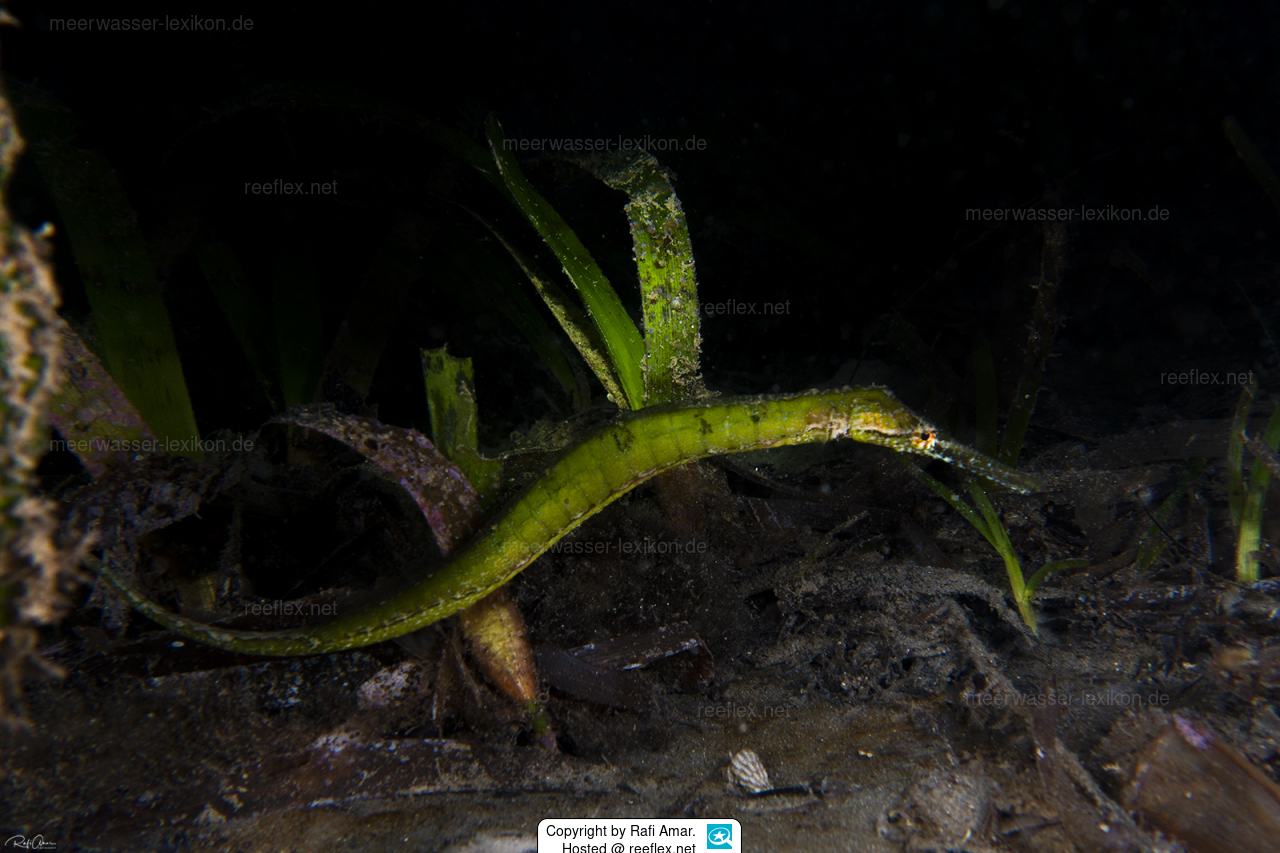
Syngnathoides biaculeatus Double-end Pipehorse, Alligator Pipefish, Double-ended Pipefish, Painted Flute Mouth, Spiraltail Pipefish, Spiraltail Pipefish

Syngnathoides biaculeatus is commonly referred to as Double-end Pipehorse, Alligator Pipefish, Double-ended Pipefish, Painted Flute Mouth, Spiraltail Pipefish, Spiraltail Pipefish. Difficulty in the aquarium: Normaal. A aquarium size of at least 500 Liter is recommended. Toxicity: Toxic hazard unknown.


Profilbild Urheber Rafi Amar, Israel

Double-end Pipehorse - Syngnathoides biaculeatus,Bweni, Kanga, Coast Region 2016


Courtesy of the author Rafi Amar, Israel . Please visit www.rafiamar.com for more information.

Uploaded by Muelly.

Image detail


Profile

lexID:
1204 
AphiaID:
218035 
Scientific:
Syngnathoides biaculeatus 
German:
Dreieckige Seenadel 
English:
Double-end Pipehorse, Alligator Pipefish, Double-ended Pipefish, Painted Flute Mouth, Spiraltail Pipefish, Spiraltail Pipefish 
Category:
Zeenaalden 
Family tree:
Animalia (Kingdom) > Chordata (Phylum) > Actinopterygii (Class) > Syngnathiformes (Order) > Syngnathidae (Family) > Syngnathoides (Genus) > biaculeatus (Species) 
Initial determination:
(Bloch, ), 1785 
Occurrence:
Andaman and Nicobar Islands, Australia, Bali, Banda Sea, East Africa, Egypt, Flores, Great Barrier Reef, Guam, India, Indian Ocean, Indo Pacific, Indonesia, Japan, Java, Kenya, Madagascar, Marschall Islands, Mauritius, Mayotte, Micronesia, Moluccas, Mozambique, Myanmar, New Caledonia, Northern Mariana Islands, Palau, Papua, Papua New Guinea, Philippines, Queensland (Australia), Raja Amat, Red Sea, Samoa, South-Africa, Sumatra, Taiwan, Tansania, Thailand, the Seychelles, Timor, Tonga, Vietnam, Wake Atoll, Western Indian Ocean 
Marine Zone:
Intertidal (Eulittoral), intertidal zone between the high and low tide lines characterized by the alternation of low and high tide down to 15 meters 
Sea depth:
0 - 10 Meter 
Habitats:
Algae zones, Coastal waters, Seagrass meadows, Eelgrass Meadows, Seawater, Sea water 
Size:
up to 11.42" (29 cm) 
Temperature:
24,9 °F - 29,3 °F (24,9°C - 29,3°C) 
Food:
Brine Shrimps, Invertebrates, Krill, Living Food, Mysis, Zooplankton 
Tank:
109.99 gal (~ 500L)  
Difficulty:
Normaal 
Offspring:
Possible to breed 
Toxicity:
Toxic hazard unknown 
CITES:
Not evaluated 
Red List:
Least concern (LC)  
Related species at
Catalog of Life
:
 
Author:
Publisher:
Meerwasser-Lexikon.de
Created:
Last edit:
2026-03-19 15:14:54 

Captive breeding / propagation

The offspring of Syngnathoides biaculeatus are possible. Unfortunately, the number of offspring is not large enough to cover the demand of the trade. If you are interested in Syngnathoides biaculeatus, please ask your dealer for offspring. If you already own Syngnathoides biaculeatus, try breeding yourself. This will help to improve the availability of offspring in the trade and to conserve natural stocks.

Info

Syngnathoides biaculeatus (Bloch, 1785)

Feeding intake.
The fish take a long time to eat at the beginning, before the food is taken up, a close inspection is carried out. After acclimatisation, the offered frozen food is eaten without problems. It should be noted that wild-caught fish behave differently than offspring when it comes to food intake. In the case of offspring, the size of the fish purchased also plays a role in the choice of food.

Synonymised names
Stigmatophora unicolor Castelnau, 1875 · unaccepted
Syngnathoides bicauleatus (Bloch, 1785) · unaccepted (misspelling)
Syngnathoides biculeatus (Bloch, 1785) · unaccepted (misspelling)
Syngnathoides blochii Bleeker, 1851 · unaccepted
Syngnathus biaculeatus Bloch, 1785 · unaccepted
Syngnathus tetragonus Thunberg, 1776 · unaccepted

Pictures

Commonly


Husbandry know-how of owners

am 24.07.13#3
Ein tolles Tier. Leider haben sie nach meiner Erfahrung genauso wie Seepferdchen nicht viel in großen Aquarien verloren. Sie haben gegen die anderen Fische keine Chance auf Dauer, wenn es um das Futter geht. Sie sind viel zu langsam gegen die Fische. Daher würde ich nur Becken empfehlen wo generell solche Tiere gehalten werden, die eher langsam sind. Ich bin ein voller Fan von den Tieren.
am 20.02.06#2
Geschlechtsunterschied: keiner

geschlechtswandel: nein
am 11.10.05#1
kleine berichtigung:männchen haben keine bruttasche,sondern "tragen die brut offen unter dem
schwanz"(kuiter;seepferdchen,seenadeln,
fetzenfische und ihre verwandten)
ich halte ein paar seit über einem jahr und kann das nur bestätigen.sind einfach zu pflegen und gingen sofort an gefrohrene mysis.
sind sehr zutraulich und beobachten mich ständig aus dem aquarium.bei arbeiten im becken kommen sie auch immer gleich an und kontrollieren,ob ich auch alles ordentlich mache.
ansonsten dienen sie meinen seepferdchen regelmäßig als reittiere(aber auch umgekehrt).
3 husbandary tips from our users available
Show all and discuss