Anzeige
Fauna Marin GmbH Tunze ICP Kölle Zoo Aquaristik BAS

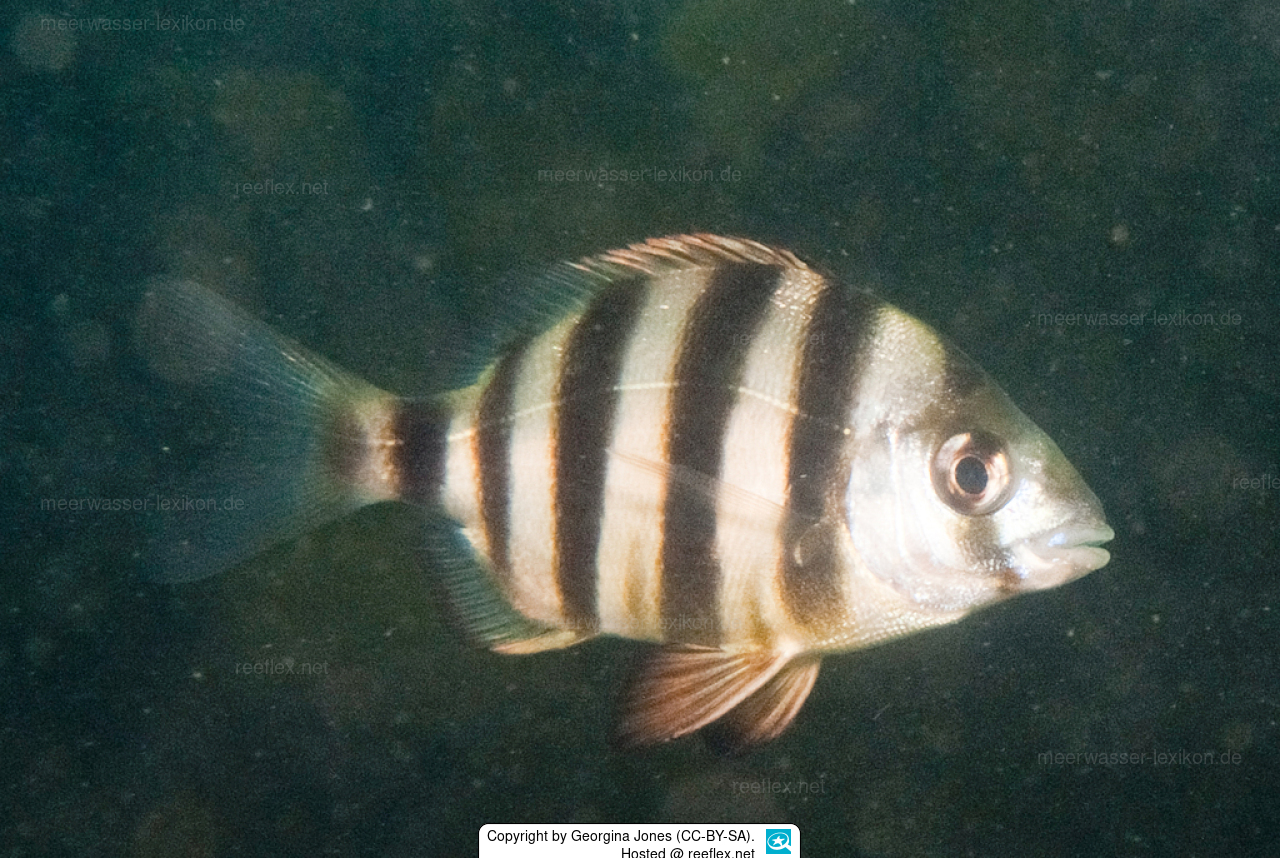
Diplodus hottentotus Zebra seabream, Zebra

Diplodus hottentotus is commonly referred to as Zebra seabream, Zebra. Difficulty in the aquarium: suitable for large display tanks (public aquarium or zoo) only. Toxicity: Toxic hazard unknown.


Profilbild Urheber Georgina Jones (CC-BY-SA), Cape Town

Diplodus hottentotus, long beach, Simon's Town, Cape Town, 7975, South Africa 2026 (CC-BY-SA)


Courtesy of the author Georgina Jones (CC-BY-SA), Cape Town . Please visit www.inaturalist.org for more information.

Uploaded by Muelly.

Image detail


Profile

lexID:
11879 
AphiaID:
713378 
Scientific:
Diplodus hottentotus 
German:
Zebra Meerbrasse 
English:
Zebra Seabream, Zebra 
Category:
Zeebrasems 
Family tree:
Animalia (Kingdom) > Chordata (Phylum) > Actinopterygii (Class) > Perciformes (Order) > Sparidae (Family) > Diplodus (Genus) > hottentotus (Species) 
Initial determination:
(Smith, ), 1844 
Occurrence:
Angola, Mozambique, South-Africa, Western Indian Ocean 
Marine Zone:
Subtidal, sublittoral, infralittoral, deep zone of the oceans from the lower limit of the intertidal zone (intertidal) to the shelf edge at about 200 m water depth. neritic. 
Sea depth:
28 - 100 Meter 
Habitats:
Brackish water, Coastal waters, Estuaries (river mouths), Rocky shores, Rock coasts, Rocky, hard seabeds, Seawater, Sea water 
Size:
11.81" - 23.62" (30cm - 60cm) 
Temperature:
68 °F - 75.2 °F (20°C - 24°C) 
Food:
Crustaceans, Fish (little fishes), Invertebrates, Worms 
Difficulty:
suitable for large display tanks (public aquarium or zoo) only 
Offspring:
Not available as offspring 
Toxicity:
Toxic hazard unknown 
CITES:
Not evaluated 
Red List:
Least concern (LC)  
Related species at
Catalog of Life
:
 
More related species
in this lexicon
:
 
Author:
Publisher:
Meerwasser-Lexikon.de
Created:
Last edit:
2026-03-22 19:32:16 

Info

Diplodus hottentotus (Smith, 1844)

The zebra sea bream (Diplodus cervinus) is a species of seabream belonging to the family Sparidae.

Inhabits coastal waters, mainly on rocky bottoms. Also enters estuaries, which are also used as nursery grounds. Feeds on fish, mollusks, crustaceans, worms, and other organisms. Has a nauseating odor; sold fresh in markets.

Synonymised names
Diplodus cervinus hottentotus (Smith, 1844) · unaccepted
Sargus hottentotus Smith, 1844 · unaccepted

External links

  1. fishbase (en). Abgerufen am 22.03.2026.

Pictures

Commonly


Husbandry know-how of owners

0 husbandary tips from our users available
Show all and discuss